TL;DR:
Quarry and aggregate scale operations are built around high-volume material movement where accuracy, speed, and visibility directly impact profitability. Truck scales do more than capture weight. They control how materials are tracked, how transactions are recorded, and how data flows across the operation. As sites expand across multiple pits or locations, systems that reduce manual processes, centralize reporting, and improve throughput become essential for maintaining efficiency and control.
Quarry and aggregate operations are fundamentally about movement. Material is extracted, processed, loaded, and transported at a constant pace, and every part of that process depends on accurate tracking and efficient coordination. The scale sits at the center of that activity. At a basic level, it captures weight and generates a ticket, but in practice it connects production, inventory, dispatch, and billing into a single system. As operations grow, the scale becomes less about weighing trucks and more about managing how information moves across the business.
Where Scale Operations Fit in Quarry & Aggregate Environments
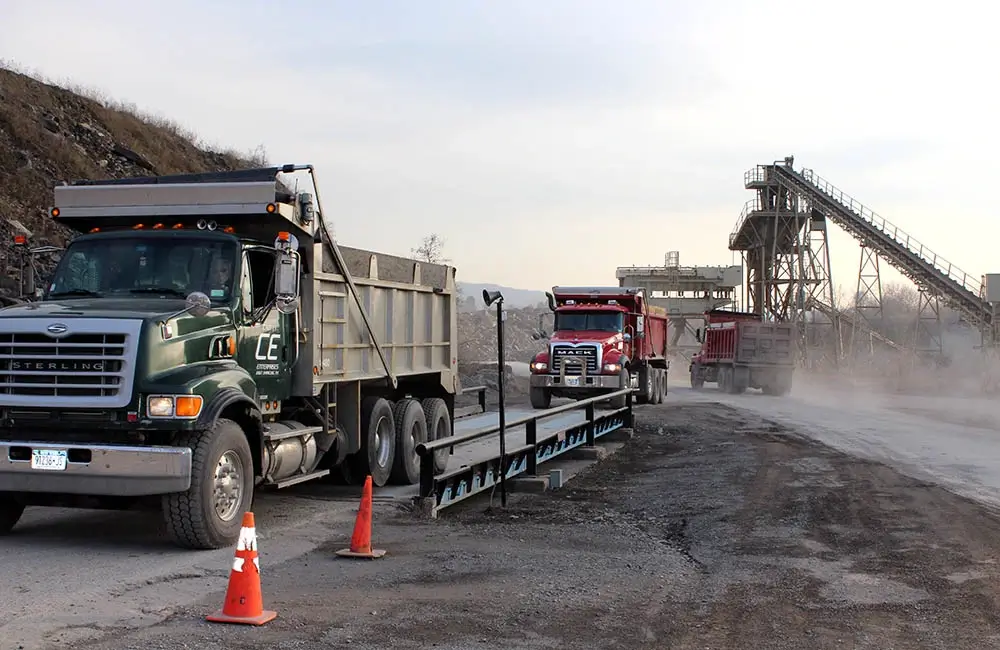
Truck scales are one of the most critical control points in a quarry operation. They sit between production and delivery, verifying material movement as it enters or leaves the site. Every transaction that passes through the scale becomes part of your operational and financial record. This is why scale systems are closely tied to your overall weighing infrastructure, connecting physical equipment with reporting, billing, and operational workflows. As operations expand across multiple pits, plants, or yards, maintaining consistency at the scale becomes more complex and more important.
How Quarry & Aggregate Scale Operations Work
While every operation has its own variations, most quarry scale workflows follow a similar structure that connects physical transactions with operational data.
Inbound and outbound weighing
Trucks are weighed either on entry, exit, or both depending on how the operation is structured. Each transaction captures weight along with key details such as material type, customer, and job information. This step creates the foundation for billing accuracy and downstream reporting.
Ticketing and transaction management
Each load generates a ticket that becomes the official record of the transaction. That ticket is used for invoicing, reporting, and tracking material movement across the operation. Even small inaccuracies at this stage can create downstream issues that affect revenue, reporting, and customer records.
Material tracking and coordination
Quarries typically manage multiple material types across different pits, stockpiles, and production areas. The scale system plays a key role in tracking where materials originate and where they are delivered, helping maintain visibility across the entire operation as complexity increases.
Operational visibility
Modern systems provide access to real-time reporting, allowing operators to monitor ticket activity, production trends, and overall site performance without relying on manual reporting processes. This level of visibility becomes essential for making timely operational decisions.
Key Challenges in Quarry & Aggregate Scale Operations
As operations grow in size and complexity, certain challenges begin to surface that can impact both efficiency and accuracy.
Manual processes and data entry
Manual ticketing and data entry introduce delays and increase the risk of errors. In high-volume environments, even small inefficiencies can compound quickly and impact throughput.
Limited visibility across locations
When multiple sites operate independently, it becomes difficult to maintain a clear, centralized view of performance. The ability to centralize operations across multiple scales becomes critical for maintaining consistency and control.
Traffic bottlenecks at the scale
Inefficient workflows at the scale can slow down truck movement, leading to congestion that affects production schedules and delivery timelines.
Disconnected systems
If scale data is not integrated with accounting or reporting systems, teams are forced to duplicate work and manually reconcile information, increasing both workload and the potential for errors.
Scaling operational complexity
Systems that work well for a single site often struggle to support multiple locations, higher transaction volumes, and increased operational demands. As complexity grows, limitations become more visible.
How Modern Scale Systems Improve Quarry Operations
Modern improvements in scale systems are less about adding features and more about removing friction from the operation.
Improved throughput
Streamlined workflows reduce delays at the scale and help keep trucks moving efficiently, which directly impacts production and delivery timelines.
Better visibility and reporting
Access to real-time data allows teams to monitor performance, identify trends, and make informed decisions without waiting for reports.
Reduced manual work
Automation eliminates repetitive tasks and improves consistency across transactions, reducing the risk of errors and freeing up time for more valuable work.
Flexible scale operations
Many operations use a combination of attended workflows and unattended kiosks to manage traffic during peak hours or extend operations beyond standard staffing availability.
A Practical Way to Evaluate Your Current Operation
The most effective way to evaluate your scale operations is to look at how information moves through your system. If visibility depends on running reports or requesting updates, there is already friction in the process. If multiple locations operate independently without a shared system, maintaining consistency becomes more difficult. If your team spends time entering or reconciling data manually, those inefficiencies are limiting your operation’s potential.
The goal is not just to process transactions, but to create a system where data flows naturally across the entire business.
The Cost of Inefficient Scale Operations
Many operations continue using their current system because it still functions and does not create immediate issues. However, the cost of inefficiency becomes more visible over time. Delays at the scale slow down production, limited visibility makes it harder to identify problems early, and manual processes increase the likelihood of errors.
Individually, these issues may seem manageable, but over time they compound and reduce operational efficiency. At a certain point, the system becomes a constraint rather than a support for growth.
Final Thoughts: Improving Quarry & Aggregate Scale Operations
Quarry scale operations are not just about weighing trucks. They are about controlling material flow, maintaining accuracy, and ensuring that information moves efficiently across the operation. As your business grows, the systems supporting it need to evolve alongside it.
If your current setup is creating delays, limiting visibility, or making it harder to manage multiple locations, it may be time to take a closer look at how your scale operations are structured. The right system should simplify workflows, improve visibility, and support long-term growth.
If your current system is slowing down operations or limiting insight, it may be time to explore a better approach. Book a demo with AWS to evaluate your setup and identify the right path forward.